About
I've spent my whole life
in two worlds.
For 23 years,
I lived in both at once.
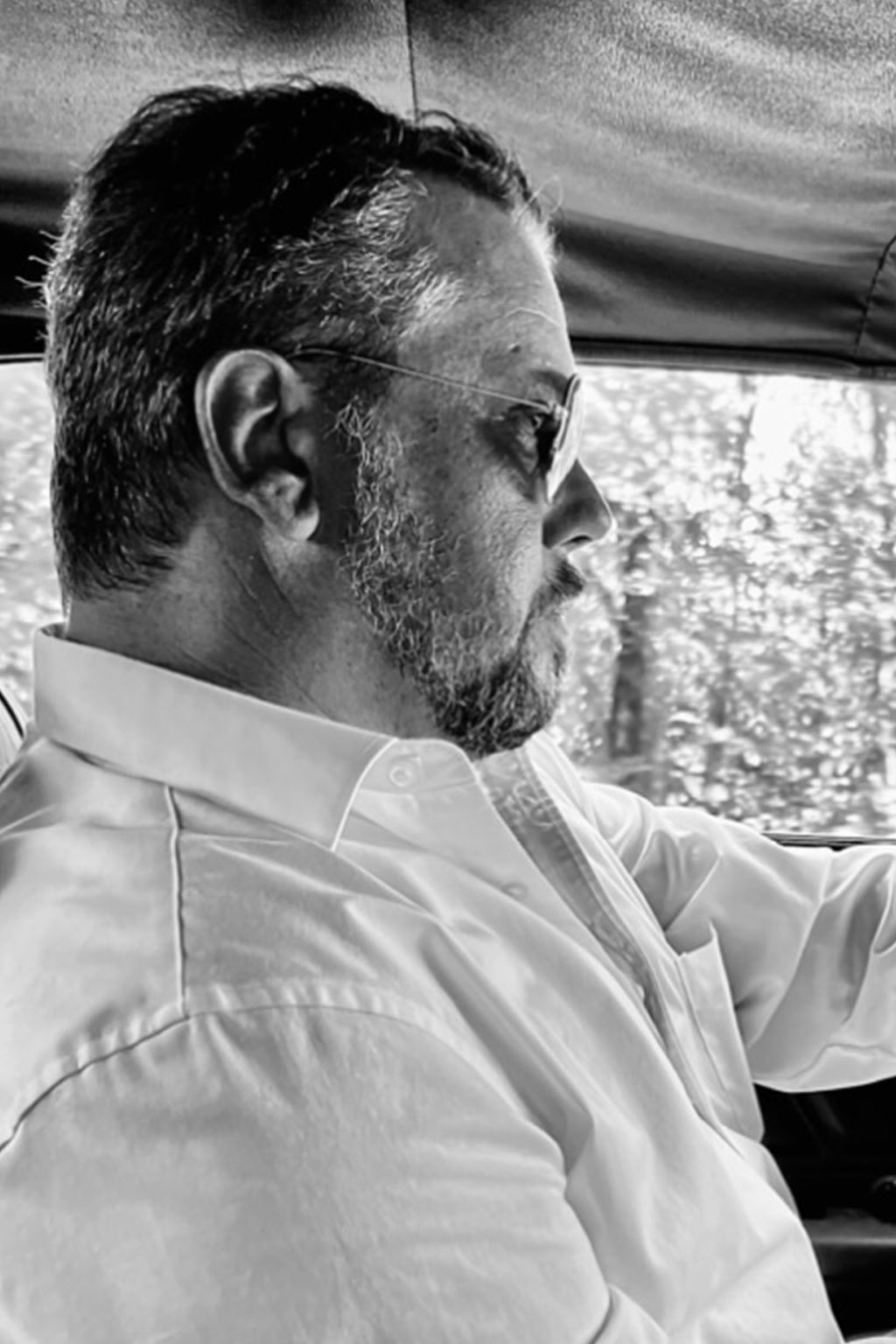
Kevin Waide. Tupelo, Mississippi.
I grew up in Tupelo, Mississippi, in a house where making things was just what you did. My father was a woodworker who sketched in the margins of newspapers. My grandparents loved music deeply. My grandmother played, along with her brother, and that folk tradition was the soundtrack of my early life. Music wasn't background noise in that house. If someone picked up an instrument, the television went off. You paid attention.
My grandfather didn't play, but he understood something important: he saw how deeply music moved me even as a young child, and he wanted that to go somewhere. At eight years old, he placed a guitar in my hands along with Mel Bay's Book of Guitar Chords and told me to learn them. I did. I never really stopped. My Uncle Steve put Bob Dylan in my ears and taught me my first songs on guitar. He shaped what I listened to and how I listened to it, and that has never left me.
He didn't play music. He simply recognized what it meant to me.
The Work
I started playing professionally in my teens and kept playing through bars, festivals, recording sessions, and stages across the South for decades. In 1999, I walked into my first graphic design job at Fax of the Day in Tupelo. For the next 23 years, I was a working designer and a working musician at the same time. Not one with a side hobby, but genuinely both.
Most designers know music from the outside. I know it from inside a cramped van at 2 AM, from a festival stage in August, from the bar where three people showed up on a Tuesday. I know what it feels like to need an identity that represents you accurately, because I needed one myself.
The Pivot
In 2022, arthritis made the decision for me. The gigging stopped.
What didn't stop was the music world. The relationships, the understanding, the instinct for what a musician's identity needs to do and what it absolutely cannot look like. That didn't go anywhere.
Focusing on brand identity work for musicians and creative professionals isn't a consolation prize. It's a natural extension of the worlds I've spent my life in. I may not play the shows anymore, but I still help people present their work with clarity, confidence, and authenticity.
The Craft
Design is the other thing I've been doing my whole life.
My father was a woodworker. My grandmother played folk music. I grew up around people who made things with their hands and took that making seriously. That thread runs through everything I do.
My design career started in newspaper production, where deadlines were hard and print specs were unforgiving. From there, television graphics, commercial printing, and eventually independent brand work. Twenty-seven years of hands-on experience across every format a brand has to live on. I understand the difference between something that looks right on screen and something that holds up in the real world.
My design thinking is rooted in the modernist tradition, particularly the work of Massimo Vignelli and Paul Rand. What drew me to their work wasn't the aesthetic. It was the discipline. The belief that every decision should have a reason, and that clarity is always more durable than cleverness.
I don't design logos. I build identity systems: marks that hold up on a storefront sign, a phone screen, printed materials, merchandise, social media, and everywhere a brand needs to appear. That's a different problem than making something that looks good in a presentation.
Working Together
What it's like to work with me.
I keep a small number of active engagements so every project gets the depth it deserves. You'll be asked questions before a mark is drawn. The process is structured, the decisions are documented, and the reasoning behind every choice is explained. Not because I expect pushback, but because a client who understands the system is better equipped to protect it.
I build identity systems designed to last, informed by decades in both the creative and music worlds. If that's what you're looking for, let's talk.
Start a Conversation